

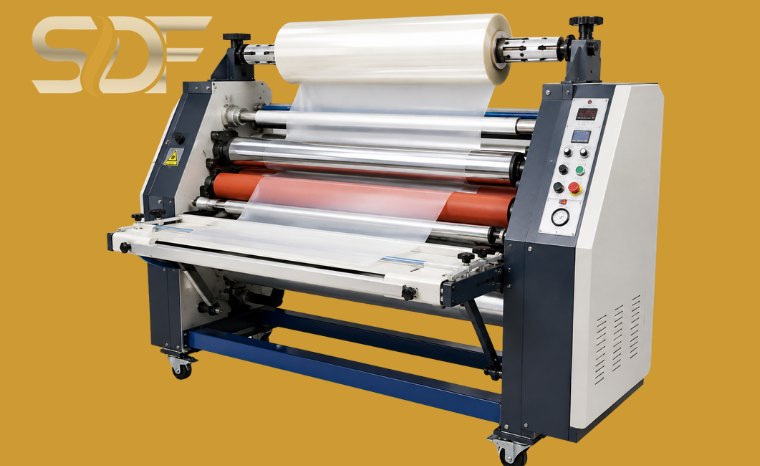
Product durability is a significant factor in ensuring quality during storage, handling, transport, and end-use in today’s manufacturing and packaging industries. There are quite a few items that require an additional layer of protection from water, dust, tears, chemicals, and any external damage. This is where lamination machines become handy. Lamination machines are used to bond two or more substrates in order to create a stronger and more durable final product. Items that can be laminated are flexible packaging, printing products, industrial films, and specialty items for either visual enhancement or improved performance purposes.
Lamination machines are used to bond such materials as paper, plastic film, aluminum foil, textiles, and other substrates. Adhesives, pressure, heat, or a combination of these processes may be employed in the bonding procedure. When the layers are bonded together, the resulting product may have improved resistance and strength compared to the properties of the original single-layer product. Lamination is crucial in applications where safety, shelf life, and appearance are critical for various industries.
The main advantage of the lamination machines is that it provides a resistance to environmental factors. During transit and storage, packaging materials can be subjected to humidity, moisture, oxygen, dust, and temperature fluctuations. When properly laminated, it can offer an extra protective barrier which will help to keep the condition of the product inside the laminates. This can help to maintain freshness in foods, enhance protection and handling strength in pharmaceutical and consumer goods packaging.
The very basic working of the lamination machines starts with the input of the basic material into the machine. Then, another material or film is added, and an adhesive or other bonding process is used depending on the desired lamination process. The materials undergo the pressure rollers in order to have good contact and bonding. The laminated material can also pass through a drying/curing section, depending on the technology employed. Lastly, the final product is coiled into rolls or ready for subsequent stages of processing, like printing, slitting, forming into pouches, or packaging.
There are various lamination machines available to cater to the specific requirements in the industry. The dry lamination machines are machines in which the adhesive is applied and dried before it is bonded to the materials. This process is commonly used in flexible packaging applications. Solventless lamination machines use a special lamination adhesive that eliminates the need for a traditional solvent-based drying step for the lamination process, which makes the machine suitable for manufacturers looking for efficient and eco-friendly production. A thermal lamination machine is a type of laminating machine that is generally used for printed materials, documents, covers, and other products that need a layer of protection on the surface.
Flexible packaging is one of the most demanding and biggest sectors of the packaging industry that uses lamination machines. Snack pouches, stand-up bags and sachets, frozen food packaging, and other multilayer structures will need various properties from each of their layers. One layer can be used for strength, one for print quality, and another for water and/or oxygen resistance. The lamination is a process that fuses these materials together to form an integrated structure with more than one function. This can allow for the creation of packaging that is both appealing and long-lasting.
Lamination technology also finds applications in printing and commercial applications. Printed brochures, labels, book covers, posters, and high-quality packaging can be laminated to keep the printed surface away from scratching, fading, moisture, and general handling. A laminated surface can also enhance the product by creating a glossy, matte, or specialty surface. This makes lamination machines advantageous for businesses that want to give their products a great look while also enhancing performance and durability.
Today, lamination machines are becoming more and more automated and equipped with precision control. Manufacturers are able to ensure production quality with PLC-based systems, touch screen interfaces, automatic tension control, accurate adhesive application, and web guiding systems. It is especially crucial to ensure proper tension control as uneven material movement may result in wrinkled or misaligned material, or poor bonding. Automated controls help minimize these problems and aid in smoother operation, particularly in high-volume production.
A further benefit of the high level of lamination technology is that there may be a possibility to save material waste. The ability to apply adhesives to the optimum specification and to carry out bonding processes in an optimum way enables manufacturers to make optimal use of materials. Modern production systems are also designed to improve production speed and reduce needless downtime. This can help companies boost production without compromising on the quality of their production. These efficiencies can make a positive difference to the overall business where the quantity of packaging films processed or industrial materials is significant.
Manufacturers should take into account the type of material to be bonded, required production capacity, bonding technology, machine speed, automation level, and maintenance needs when choosing lamination machines. The appropriate equipment should integrate with existing production equipment and have the ability to yield consistent production. Availability of spare parts and technical support is also important in ensuring reliable long-term operations.
In conclusion, lamination machines are highly critical in the current manufacturing industry since they assist in the production of more durable materials. They can be used in flexible packaging, printing, pharmaceuticals, consumer goods, and industrial production. The machines assist in the joining of different materials with precision, thereby making them more durable and allowing easy production. Lamination machines will remain very important in manufacturing companies that require durable materials in the future.