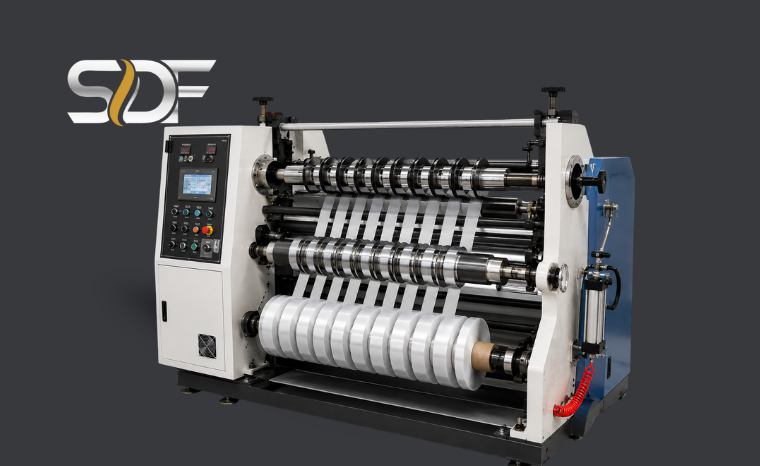
Proper handling of materials is necessary in the current manufacturing and converting industries to improve product quality, reduce waste, and enhance efficiency. Wide rolls are usually used for materials such as paper, plastic film, aluminium foil, laminate, labels, and flexible packaging. However, wide rolls may not be suitable for their end use. That is where the slitting machine becomes very useful. The slitting machine is used to slit wide rolls into narrower widths.
The main application of slitting machines is to ensure the accuracy and uniformity of material conversion. A Jumbo roll is placed on the unwinding end of the machine, where the material passes through the rollers. This material then goes through a slitting section, which has special blades. Manufacturers may use razor blades, shear blades or score knives depending on the type of material and the desired finish. The material is cut to the correct widths, and each strip is rewound individually to form smaller finished rolls.
One of the best benefits of the state-of-the-art slitting machines is precision. Industries where even minor changes in roll width can have an impact on the next production process require accurate cutting. In advanced machines, the material is held in place by a proper web guiding system and tension control system. This will minimise uneven edges, wrinkles, telescoping and other problems in roll quality. The consistent roll quality also simplifies printing, lamination, packaging and other downstream processes.
The flexible packaging industry has a huge market share of modern slitting machines. Jumbo rolls are commonly converted to smaller rolls for subsequent processing for materials like BOPP, PET, PE, CPP, or laminated films. The finished rolls could be subsequently employed for printing or in making pouches, coating and packaging. The slitting process is crucial for ensuring that the material is cut to the correct size, which can help the manufacturer run a more efficient production line.
Another large consumer of slitting machines is the paper industry. Large paper rolls can be reduced to smaller rolls for printing, labelling, wrapping, etc. Aluminium foil manufacturers also employ slitting technology to cut the aluminium foil rolls into desired widths. The thinness and delicacy of aluminium foil require particular attention to be paid to the control of tension, which is especially significant in order to prevent tearing or wrinkles during the processing.
Slitting machines are also crucial equipment for adhesive tape production. These giant BOPP adhesive tape rolls are trimmed to form smaller rolls for carton sealing, stationery, masking and industrial applications. The quality of the slitting system determines clean edges, evenness of width and rolls wound correctly. This enhances the tape’s aesthetics and user-friendliness and also aids in the quickness of production.
The tension control system is one of the most important elements that can impact machine performance. In slitting, the material should have the proper tension during the process of moving through the machine. Excessive tension may cause stretching or damage to the product, and less tension may cause loose and uneven rolls. The modern slitting machines have automatic tension control systems which keep material moving at a stable rate. This helps to increase winding quality and minimise production errors.
Automation has also revolutionised the operation of slitting machines. Most of today’s systems include PLC control, touch screen operators, auto web guiding, programmable settings and digital monitoring. For each material type, width, speed and winding requirements, operators can set production parameters. These features minimise manual adjustments and produce repeatability, particularly when handling multiple production orders.
In addition, waste minimisation is equally important for effective processing of materials. Improper roll alignments or improper cutting may result in the rejection of rolls and wastage of materials. Manufacturers can improve the accuracy of cutting and use of available materials by utilising the latest slitting machines. It is also possible to minimise damage to materials through improved tension control and web guiding.
There are many aspects that manufacturers need to consider while selecting slitting machines. The material type to be processed is also an important factor since each material requires different blade systems and tensioning. In addition, one should consider production speed, max slit width, min slit width, level of automation, rewinding capabilities and maintenance needs. The right machine for the production line can ensure better reliability and long-term performance.
Automation, precision, and smart manufacturing are the future trends in the field of material converting. Newer slitting machines offer better control and monitoring systems, and more efficient designs. Advanced slitting technology will stay an integral component of industrial processing as manufacturers will continue to demand faster production with higher finished roll quality.
To sum up, slitting machines are efficient options for delivering the precise finish dimensions and turning wide rolls of material into the desired size. These machines are beneficial in numerous packaging, paper, foil, film and adhesive tape applications. owing to their ability to offer precise cuts, tension control, economy in rewinding and high-quality rolls. By employing the right slitting machine, producers will be able to reduce waste, increase efficiency and work more effectively.