

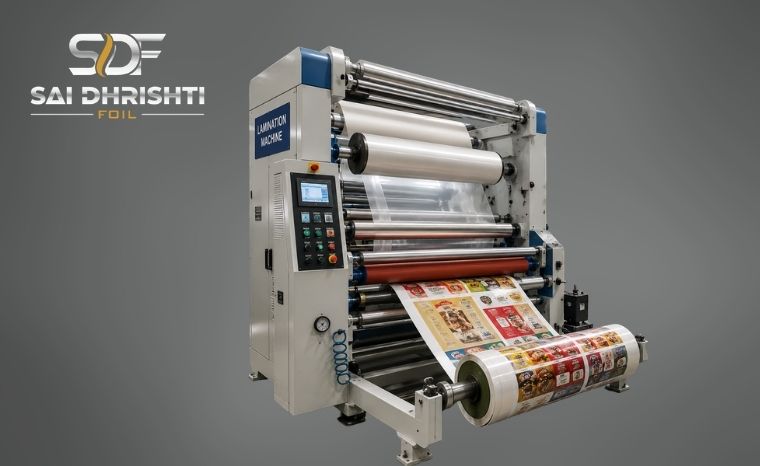
In the current competitive environment, durability and the appearance of products are among the key factors for success in manufacturing and packaging operations. Laminated materials can provide better protection and better appearance, which makes them a preferable option for different sectors. It is at this point that laminating machines can prove useful. They use adhesives, heat, and pressure to unite two or more layers of materials into one high-quality product.
The range of applications of such machines is wide enough, as it includes flexible packaging, printed labels, books, and industrial films.
Lamination Machines: What Are They?
The lamination machine is an industrial device that is used for joining several layers of different materials like paper, plastic film, aluminum foil, fabric, or flexible packaging substrates to form a composite structure. This technique provides the laminated material with improved durability, resistance to moisture, protection from damage while printing, and better aesthetics.
Nowadays, such devices have an automated mechanism and energy-saving design.
Common Lamination Machine Types
Each industry needs its own type of lamination machine depending on the material which is being processed. Below are some of the popular lamination machines:
Dry Lamination Machines
This kind of lamination machine applies the adhesive on one of the substrates and then dries it to laminate with another material. It is extensively used for making flexible packaging products.
Solventless Lamination Machines
The eco-friendly lamination machines that do not use any kind of solvents, yet deliver excellent bonding quality.
Thermal Lamination Machines
These are the lamination machines that use thermal film to laminate printed materials like book cover pages, brochures, certificates, and photos.
Wet Lamination Machines
As the name indicates, it uses wetting adhesive for laminating the material.
The Mechanism of Lamination Machines
While there are differences between each model type, the mechanism behind each of them is quite the same.
· The base material is inserted into the machine.
· Laminating film or glue is applied to its surface evenly.
· Secondary material is aligned and pressed together with it by pressure rollers.
· Where necessary, heat treatment improves the strength of bonding.
· Finally, the laminated material is cooled and then rolled up.
Such an automatic mechanism allows avoiding mistakes in the process and achieving high-quality products.
Applications of Lamination Machines in Different Industries
Due to the versatile nature of the lamination machine, it has many applications across industries.
Packaging Materials
Food pouches, stand-up bags, medicine packaging, and lamination film all need to be strongly bonded for protection.
Printing Industry
Printed catalogs, magazines, posters, business cards, and books all have their cover laminated to increase durability and appearance.
Pharmaceutical Industry
Medicine packaging is done using laminated films that offer moisture resistance and protect sensitive products.
Consumer Goods
Aesthetic and durable packaging of consumer goods can be done using lamination.
Industrial Manufacturing
Specialty industrial manufacturing requires the use of advanced lamination technology.
Advantages of a Lamination Machine
Buying a state-of-the-art laminating machine can give a number of benefits to a business.
· Increased durability of the product
· Increased resistance against water and chemicals
· Better print protection
· Nice surface finish
· Ability to produce quickly
· Decrease in material wastage
· Consistency in the quality of products
All these benefits will help in producing high-end products efficiently and effectively.
Recent Developments in Lamination Technologies
New developments are being made in the lamination industry with respect to efficiency and environmentally friendly practices.
Some of the main developments being made in the industry are:
· Use of solventless lamination technology
· Use of PLC and touchscreen automated technology
· Production of energy-efficient machines
· Production of more and more recyclable packaging materials
· Installation of smart monitoring systems
· Use of high-speed lamination lines for large-scale manufacturing operations
Optimal Selection of Lamination Machines
The selection of appropriate lamination machines is determined by production quantities, substrate materials, adhesive technology, degree of automation, machine speeds, maintenance needs, and future plans for growth. Business owners must also take into account after-sales services and spare parts supply to avoid disruption in their work.
We say that
As industries become more demanding of their products in terms of strength, appearance, and durability, lamination machines will forever remain an essential part of contemporary manufacturing. The capability of lamination machinery to perfectly join different materials increases the performance and packaging capabilities of the products being manufactured in many industries. From flexible packaging and printing to the pharmaceutical industry and industrial uses, using the best lamination machinery is vital for companies that wish to compete.